How to Buy a Poker Bot in 2026: Buyer’s Guide, Red Flags & How to Spot a Scam

Buying a poker bot is easy. Buying one that actually wins, instead of quietly donating your bankroll while you think it’s working, is where most people lose money. And in 2026 it’s harder than ever, because the tools to fake a “working bot” got cheap. This guide is the due-diligence process: how to read the market, what genuinely signals a real vendor, what to verify before you pay, and the red flags that should end the conversation.
Verify these five things before you pay
- Who you’re dealing with — an established, traceable brand with real history online, not an overnight project.
- What kind of bot it is — a modern AI/hybrid engine, not a 2010s rule-based script.
- A short live trial — that it actually runs and plays on your hardware before you commit.
- The maintenance model — who updates it when the room changes its client (which happens constantly).
- The real cost and the real risk: total cost of ownership, plus an honest account-ban discussion.
The poker bot market in 2026: who’s actually selling
Before you evaluate a single product, understand the market. Roughly five kinds of “poker bots for sale” exist right now:
- Old rule-based scripts (OpenHoldem, Shanky, Warbot and similar). Windows screen-scrapers built on pre-written rules, most last updated 2018–2021. Predictable, known to the rooms, and over a real sample they run from losing to barely break-even. Cheap to buy, expensive to own.
- Telegram and forum sellers. Some are legitimate; many take crypto and disappear. The format isn’t the problem: the lack of identity, support, and recourse is.
- Resellers repackaging someone else’s engine with a markup and no ability to fix or update anything.
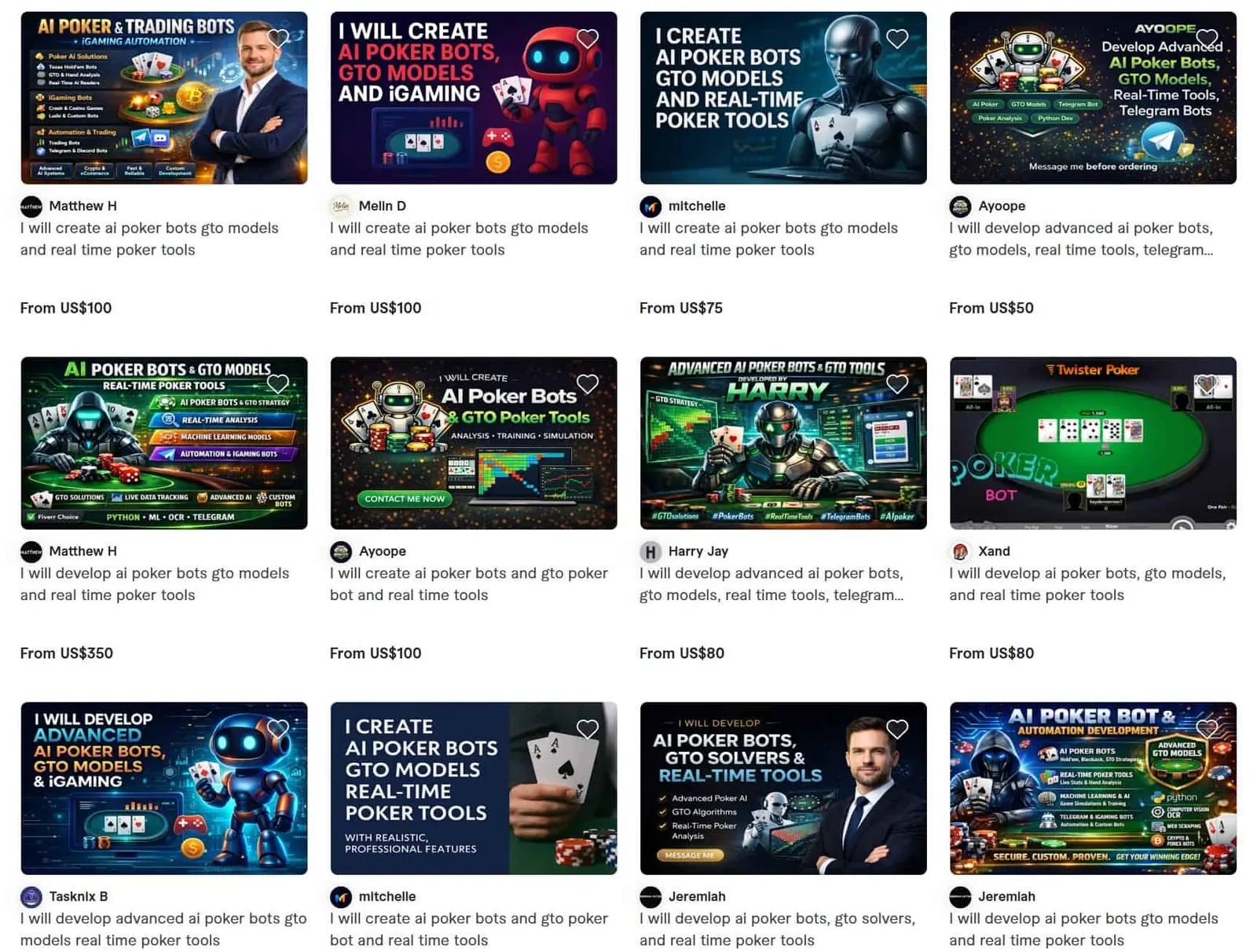
- Fake “AI bots.” The fastest-growing category — more on why below. 3UPGaming is the textbook case: a professional-looking site and slick demos, but the bot is an imitation that simply gives its chips away to opponents, and it’s cost real players real money. It’s documented in full: 3UPGaming poker bot review. The same wave has hit freelance marketplaces: hundreds of “Poker AI Bot” gigs have appeared on Fiverr, many from throwaway one-day accounts that even lift real vendors’ materials (ours included) to look credible. They pull you off-platform into a private messenger to “close the deal,” where there’s no buyer protection and no recourse once you’ve paid.
- Maintained AI vendors. A real engine, per-room support, updates, a short trial, and an identifiable business with history. The minority, and the only category worth your money.
Why you can’t trust demos, graphs, or reviews in 2026
This is the part that’s changed everything. Since 2024, AI tools let anyone build almost any software with zero real qualification (“vibe-coding”). An amateur with no edge can now stitch together a bot that looks like it works: a jury-rigged contraption that runs, sits at tables, and loses money slowly. And the proof? Trivial to fake. Convincing winrate graphs, demo videos, screenshots, even glowing reviews can be generated in minutes, and it gets easier every month.
The result is a flood of scam projects across every niche, poker bots included. And the flashiest, most convincing “evidence” is the easiest to fabricate. A 500 BB/100 graph or a polished demo video tells you almost nothing in 2026. Chasing “proof” is exactly the trap scammers want you in.
What actually signals a real vendor
If demos and graphs are unreliable, what isn’t? Brand authority and history. A scammer can fake a video in an afternoon, but they can’t fake years of domain age, a broad online footprint, and an accumulated trail of mentions. Before you trust anyone:
- Check the age and history of the site and domain: a brand-new domain behind a big “AI bot” promise is a warning, not a feature.
- Search the brand name and see how widely and how long it’s been present online. Real operations leave a trail. Type a name like PokerBotAI, Shanky Bot, WarBot, or PokerBot and you’ll see established, traceable brands with years of footprint, versus a project that appeared last month with nothing behind it. (Established doesn’t mean the tech is modern — old rule-based brands are real but dated — but it does mean they’re not an overnight scam.)
- Read reviews and social signals — but weigh them, don’t trust them blindly; these are fakeable too.
In short: in 2026, trust the trail, not the trailer.
Then run the product checks
Know what kind of bot it is
The biggest predictor of whether a bot wins is its decision approach. Rule-based and pure solver-lookup bots are predictable and easily exploited; modern hybrid AI (a GTO foundation plus real-time exploit adaptation) is what actually beats soft fields. A cheap “lifetime” bot is almost always rule-based: a dead end.
Full breakdown: Types of Poker Bots and What Is a Poker Bot.
Take the trial seriously
A real vendor lets you see the bot running before you fully commit, typically a short live session (around an hour) so you can confirm it actually plays and that you can launch it on your own hardware. That’s the verification that matters in practice: it works, on your setup, with support to get it going. No serious seller hands you a multi-month “trial,” and no honest one needs to bury you in graphs.
Understand realistic pricing
Models vary — one-time license, subscription, or pay-per-hand. What matters is total cost of ownership, not the headline number. A $99 “lifetime” bot that gets your accounts banned in a week is the most expensive option on the market. Budget for entry cost, ongoing/usage cost, infrastructure, and a ban-loss reserve.
Full economics, with numbers: How Much Do Poker Bots Cost.
Check the maintenance model and room fit
Rooms patch their clients constantly, so a bot is a service, not a one-time purchase. Confirm how often it’s updated and how fast they react when a room changes. And confirm your specific room is genuinely supported and currently maintained: different apps (PPPoker, ClubGG, Pokerrrr2, X-Poker, GGPoker) behave differently.
Room-by-room setups: see the rooms list. How detection actually works: How Poker Rooms Catch Bots.
Red flags — walk away if you see these
- A polished “AI bot” behind a brand-new domain with no online history.
- “Undetectable,” “guaranteed profit,” or “100% winrate.”
- A “lifetime” bot for a suspiciously low one-time price.
- No live trial of any kind before payment.
- No support, no update history, no identifiable business: crypto-only and gone after payment.
- Tools that claim to “see opponents’ cards,” a modified room APK, or an “RNG crack.” These don’t exist; rooms use audited RNGs. Always a scam.
Questions to ask any vendor before paying
- How long have you been operating, and where can I see your track record online?
- What decision engine does it use — rule-based, solver-lookup, or hybrid AI?
- Can I see it run live on my actual room before paying, and launch it on my hardware?
- Is my specific room supported, and when was it last updated?
- How do you handle a room client update: how fast, and is it included?
- What’s the total cost: entry, ongoing/usage, and infrastructure?
- What’s your honest detection/ban experience on this room?
Where PokerBotAI fits
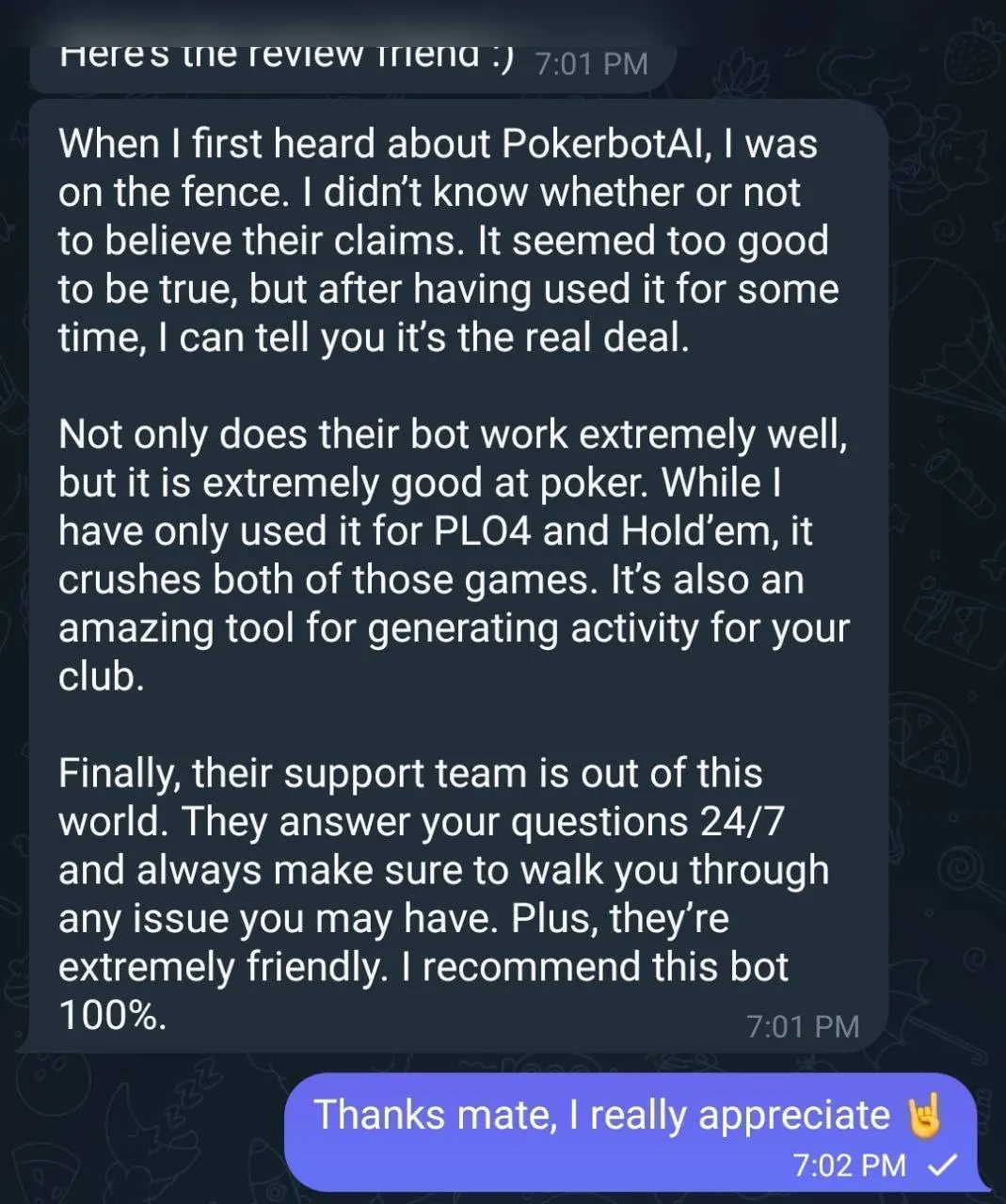
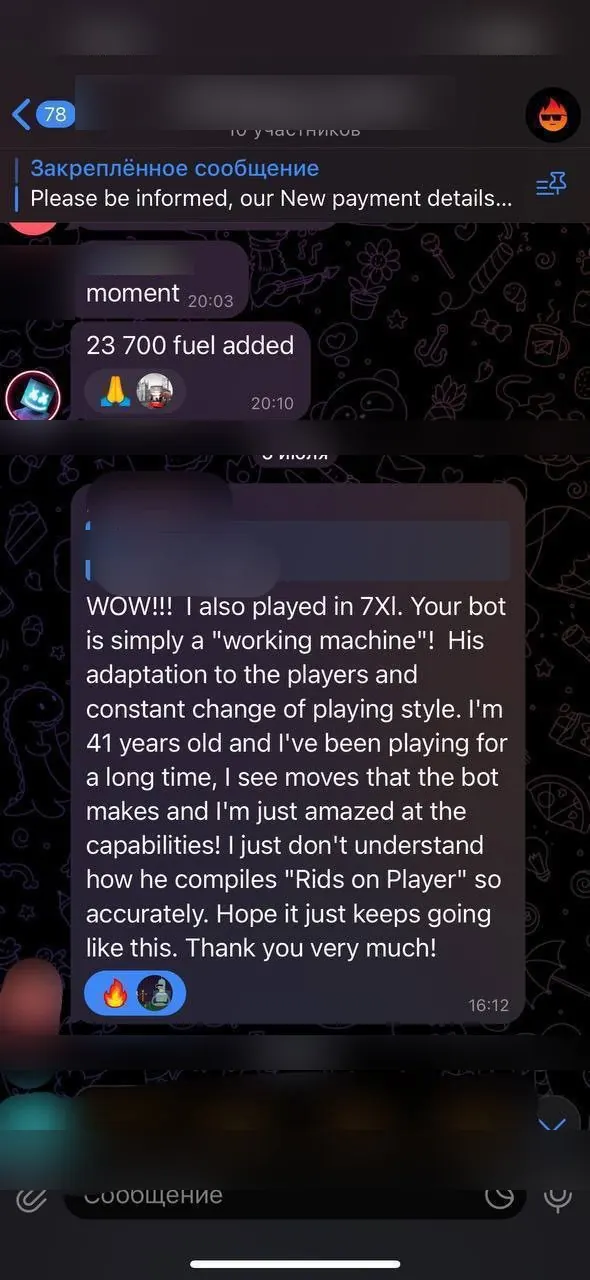
We’re a long-established vendor with the kind of track record this guide tells you to look for: a brand with real history and footprint, not an overnight site. PokerBotAI is a maintained hybrid-AI bot (a GTO base with real-time exploit adaptation), supported per-room across 20+ apps including PPPoker, ClubGG, Pokerrrr2, X-Poker, PokerBros, GGPoker and CoinPoker. We give clients a short live session to confirm the bot works and to get it running on your own hardware, an in-house team that updates per room change, and a personal manager on support, operating as a registered company (Hong Kong). We don’t chase anyone with hundred-thousand-hand graphs; an established vendor doesn’t need to prove itself to be trusted.
Next steps
- Playing a specific room? See supported rooms and setups.
- Want a quote or a live look before you decide? Message @PokerBotAI_ShopBot on Telegram, our only official sales contact (we don’t use resellers or unsolicited DMs).
- Want the deeper background first? Start with Types of Poker Bots and How Much Do Poker Bots Cost.
FAQ
How do I buy a poker bot safely?
Start with the vendor, not the product: confirm it’s an established brand with real online history, because in 2026 demos and graphs are easy to fake and a trail of footprint isn’t. Then confirm it’s a hybrid AI bot, take a short live trial to see it run on your hardware, check the update model for your room, and understand the full cost and ban risk.
How much does a poker bot cost?
From “free” open-source projects (which no longer work for real money) to commercial bots and custom builds. What matters is total cost of ownership: entry price plus ongoing/usage costs, infrastructure, and a ban-loss reserve. See our cost breakdown.
Are free poker bots for sale real?
Free bots exist only as training tools that play a computer. For real-money play, open-source scripts stopped working years ago, and “free” cracked commercial bots are overwhelmingly malware that steals logins and wallets.
How do I know a poker bot isn’t a scam?
Don’t lean on demos, graphs, or reviews, all easily faked in 2026. Lean on brand authority: domain age, breadth and longevity of online footprint, and a searchable history. Established names have a trail; overnight “AI bots” don’t. A short live trial on your own hardware is the practical confirmation.
Will I get banned for using a poker bot?
It’s a real risk on every room. Good humanization and setup keep it low (lower than old profile bots) but nothing is zero. Keep a 10–15% ban-loss reserve and start small. Any vendor promising zero risk is lying.
Related posts

 Blog Shanky Poker Bot Review Things you need to know about how to spot a poker bot.
  Blog What to Learn About Libratus Poker Bot? In this article, you will know what is the Libratus poker bot? Please read this.